12 Traits of a Great UX Designer
 Ryutaro Sakai 7 min read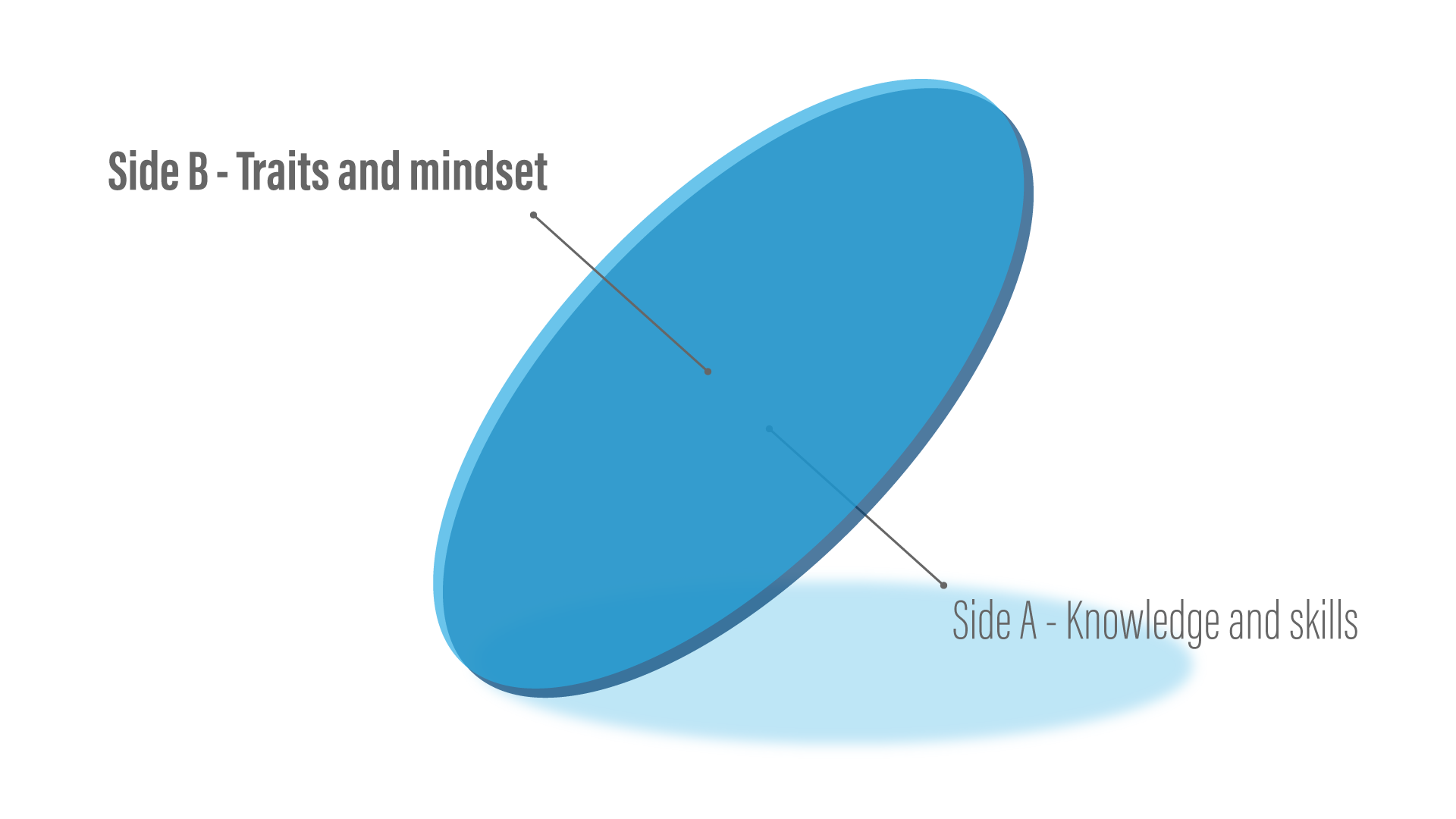
Many people struggle to find out whether UX is the right fit for them, especially when considering a career switch from a different field. Since UX is such a large umbrella that includes so many different disciplines, it’s hard to understand from the outside what it’s like to be a UX designer — and what makes you a good fit to pursue a career in UX.
Aside from the more obvious practical knowledge and skills you need — UX principles, methodology, research fundamentals — there’s another side of the coin: traits and mindset.
Throughout my career as a UX designer, I observed great designers and learned from them. Over time, I noticed there are 12 traits that great UX designers share, which I’d like to share with you.
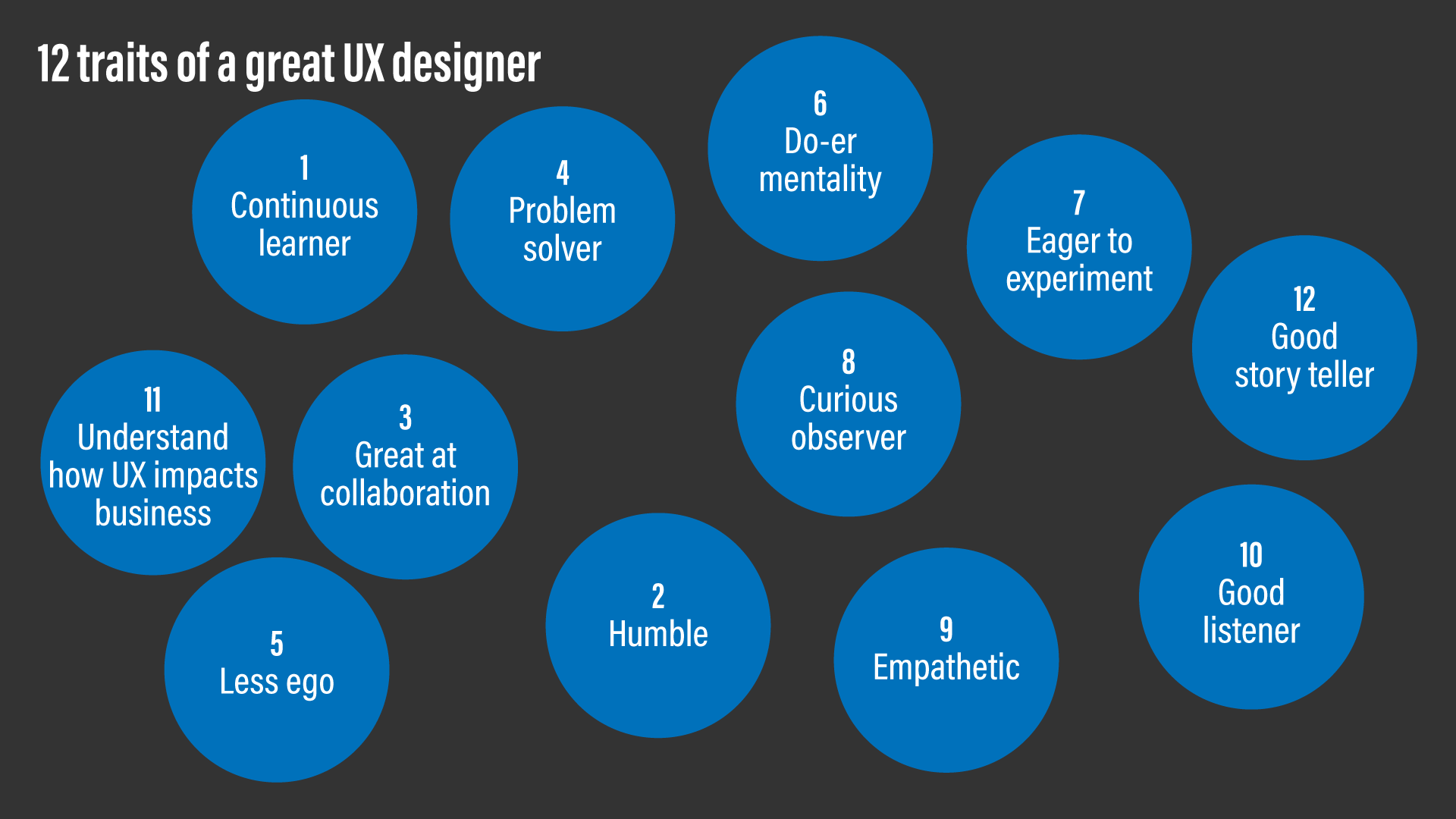 12 traits of a great UX designer
Here’s the full list at a glance:
- Continuous learner
- Humble
- Great at collaboration
- Problem solver
- Less ego
- Do-er mentality
- Eager to experiment
- Curious observer
- Empathetic
- Good listener
- Understand how UX impacts business
- Good storyteller
Let’s take a closer look at each one.
1. Continuous learner
The field of UX is constantly expanding and evolving. The underlying technology is also continuously evolving. There are always so many things to learn — a new methodology, process, technology, tools, or trend. To be a UX designer means you live through a constant stream of new information. If you love learning new things, UX gives you that exciting, never-ending opportunity to learn throughout your career.
2. Humble
User experience is something that varies from person to person. When you and I use the same product, the experience you have will be different from mine.
What this means is that understanding how other people think is an essential part of the UX design process. You need to be humble to remain open to other people’s comments and critiques. Whether positive or negative, you will learn a lot from going through this process if you stay open.
3. Great at collaboration
UX design is like a team sport. In today’s complex environment, a UX designer most often works as part of a UX team — which may consist of UX designers, UI designers, and UX researchers. That team is typically part of a larger product team including PM, engineering, and more.
UX designers often function as facilitators across many teams, and sometimes as evangelists educating people from other groups unfamiliar with UX. In those roles especially, being great at collaboration is not optional — it’s essential.
In some cases, this kind of cross-team facilitation can drive changes with impact on a customer’s overall journey far beyond just the product UI itself.
4. Problem solver
A UX designer solves user problems. The focus should always be solving a user’s problem — not crafting a shiny, cool interface, which is always tempting. Being a problem solver also means being able to spot problems in the first place, and to define them clearly before attempting to solve them.
5. Less ego
The core of user-centered design is that a product or service should be designed for the user, not for the designer. It’s easy to get personally attached to your own designs — they become your baby. I’ve been there too. Personal attachment can make it easier to put in hard work, but it’s a trap.
As human beings, it’s probably not possible to become completely free of ego. Nevertheless, it’s important to keep your ego in the background as much as possible. In order to work effectively, your ego cannot be at the forefront.
6. Do-er mentality
As much as UX designers are thinkers, they are do-ers at their core. All the great thinking needs to be distilled into concrete, tangible output through action. Do-er mentality powerfully drives this — taking stakeholder feedback and user research insights and turning them into design solutions.
7. Eager to experiment
Every UX project is different, with a countless number of variables. Great UX designers are eager to experiment with new ideas, concepts, processes, and methodologies to see what works and what doesn’t. To find out, you need to give things a try. Only through hands-on experimentation do you find the best solution for the problem in front of you.
8. Curious observer
During usability tests or user research, you need to shut your mouth and be a curious observer — carefully watching how users interact with your prototype, card sorting exercise, or whatever stimulus you have.
When you ask questions to users, people tend to answer what they think the right answer should be, rather than how they really feel. By observing how participants behave, take actions, and express themselves through body language, you uncover things that are never verbally stated.
When I use a prototype I created as a stimulus in research, it’s always tempting to interrupt a struggling user and show her how to complete the task. But I need to control myself — otherwise I ruin the research with my own ego.
9. Empathetic
When listening to users describe their pain points with a product or service, I need to be empathetic — to truly put myself in the user’s shoes and feel their frustrations from their perspective. Without empathy, UX is just decoration.
10. Good listener
A UX designer talks to many people — users and stakeholders alike. I need to listen carefully to PMs, engineers, and others to understand product requirements, constraints, and business context.
When listening to users during research, it becomes even more important to focus on listening rather than trying to show off how clever my prototype is. I often feel an urge to steer the conversation toward my hypothesis. But I should remain patient, listen carefully, and minimize any chance of manipulation — so I get quality results, not just confirmation of what I want to hear.
11. Understand how UX impacts business
UX designers advocate for users as strongly as possible. What’s often overlooked is that UX is still part of a business. A great UX concept that test participants absolutely loved won’t work in reality if it’s too expensive to build under real constraints.
UX designers need a solid understanding of how UX impacts business, so they don’t propose unrealistic solutions — even when users love them.
12. Good storyteller
When presenting UX concepts or research findings to a larger product team, UX designers need to become good storytellers — without getting egoistic about it. At the end of the day, UX designers create experiences for users, not for themselves.
This storytelling isn’t about promoting how great I am or how great my team is. It’s about how a proposed user experience solves user problems in a way that is realistic, effective, and delightful. How I tell the story matters — it affects whether my collaborators feel they want to support me. When storytelling is filled with ego, support dries up.
As you can see, all twelve traits are deeply interconnected with each other.
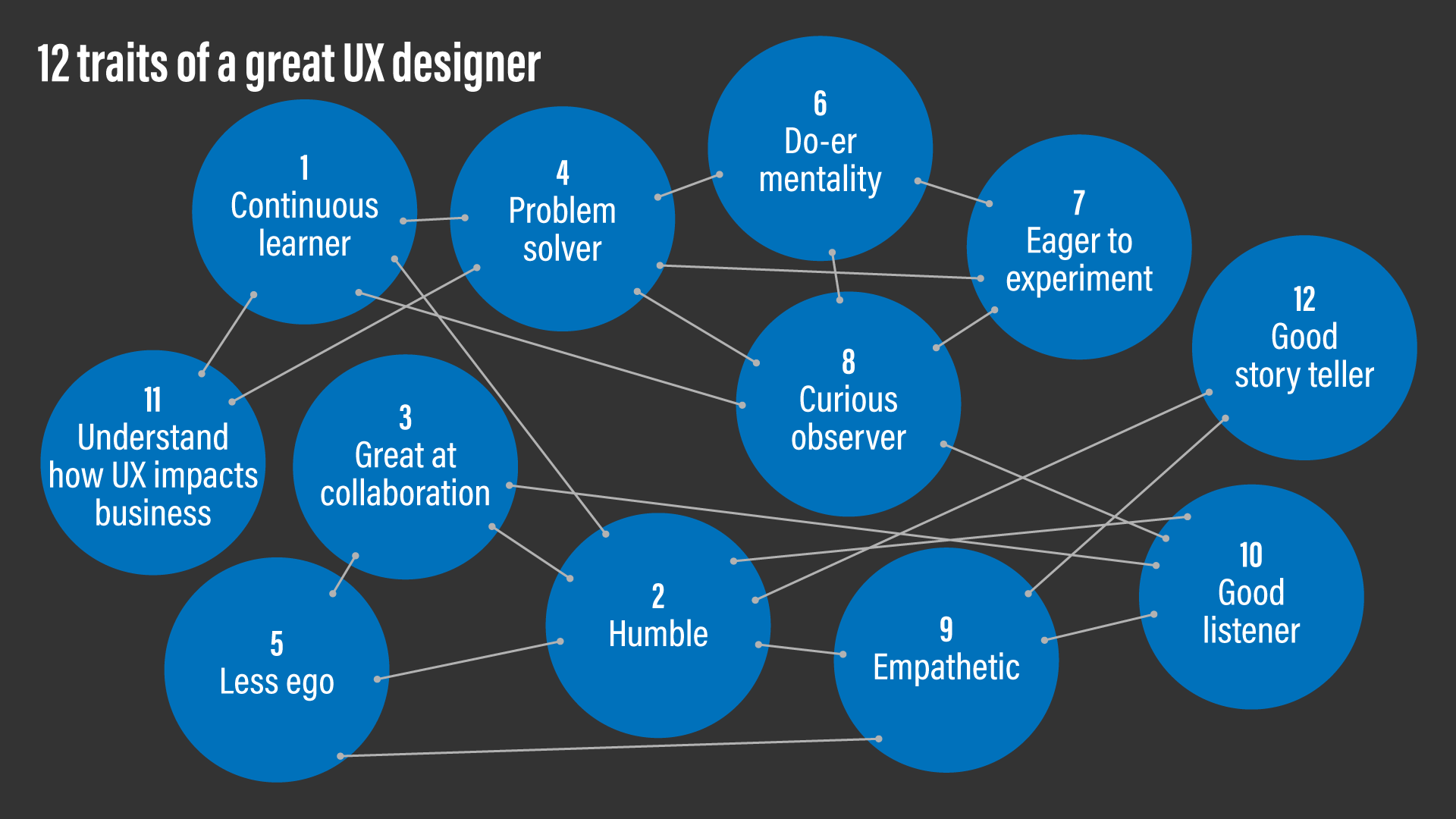 All 12 traits are deeply inter-connected with each other
Many of these can be learned and acquired — especially #11: understand how UX impacts business.
Some people will naturally have more of these traits than others. Going through these 12 and honestly assessing which feel natural to you — and which don’t — can help you picture whether you have the right traits and mindset to become a great UX designer.
Having the right traits and mindset matters more than it may seem. I used to think they weren’t so important. My own experience taught me otherwise.