Competitive Analysis: How to Approach It Effectively
 Ryutaro Sakai 5 min read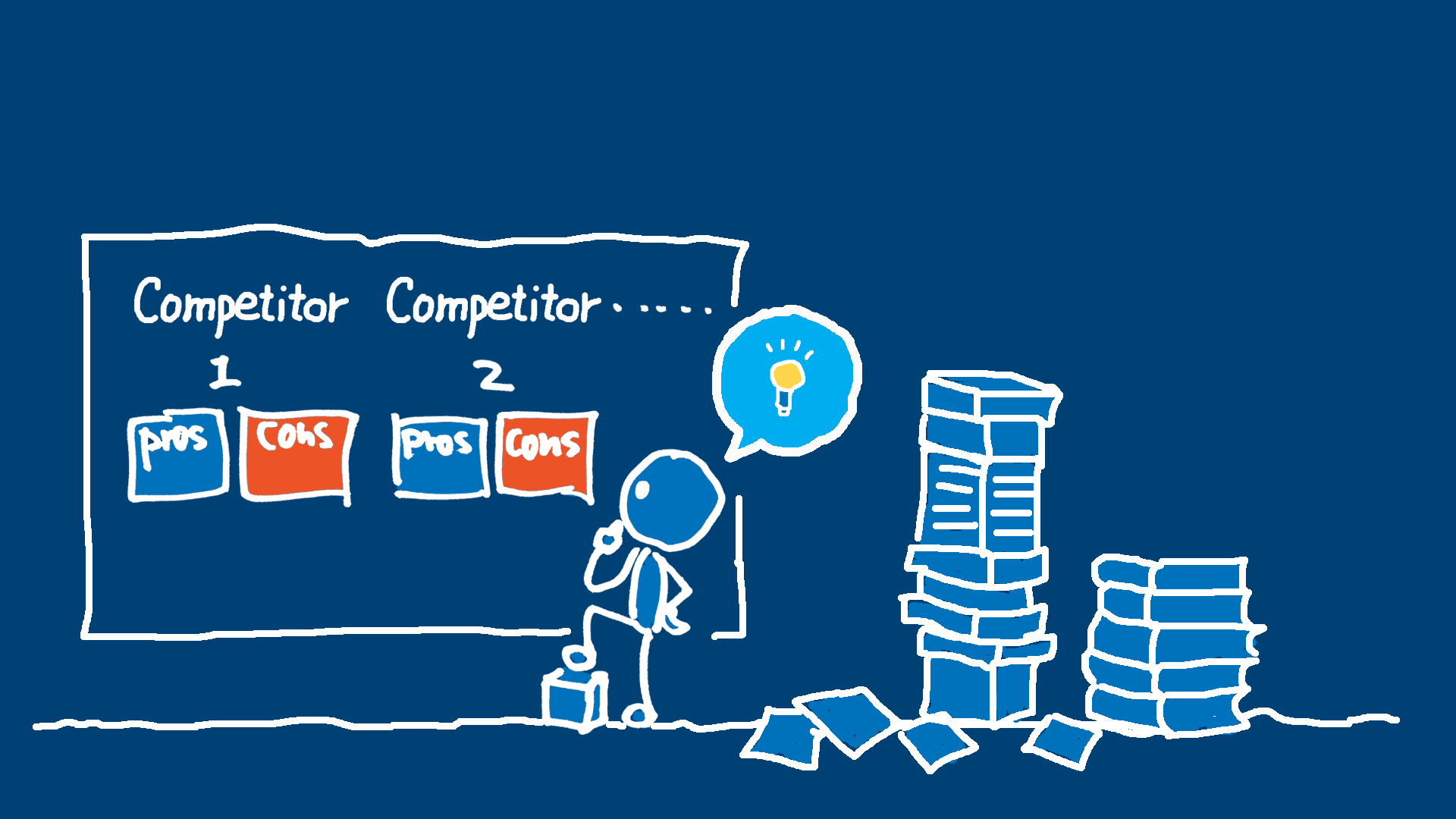
Competitive analysis — I’m not talking about market analysis such as market share, revenue, value proposition, and number of customers, which are typically done by product managers or business strategists. I’m talking about a competitive analysis of the user experience of competitor products, as a UX designer.
If you do it with the right approach, you can learn a lot of things that will greatly benefit your UX work.
In this article, I’d like to share one effective approach to conducting a competitive analysis in a UX project.
1. See the big picture first
 The key is to see the big picture first, rather than getting caught up in details
Many people are tempted to jump right into a competitor’s product and start analyzing every single UI element immediately.
But this is not a good idea. It makes you get caught up in interface details without ever understanding the bigger picture.
The purpose of competitive analysis — or competitive benchmarking — is to learn from other products so you can create something better. The key is to see the big picture first, rather than getting lost in details.
2. See things in context
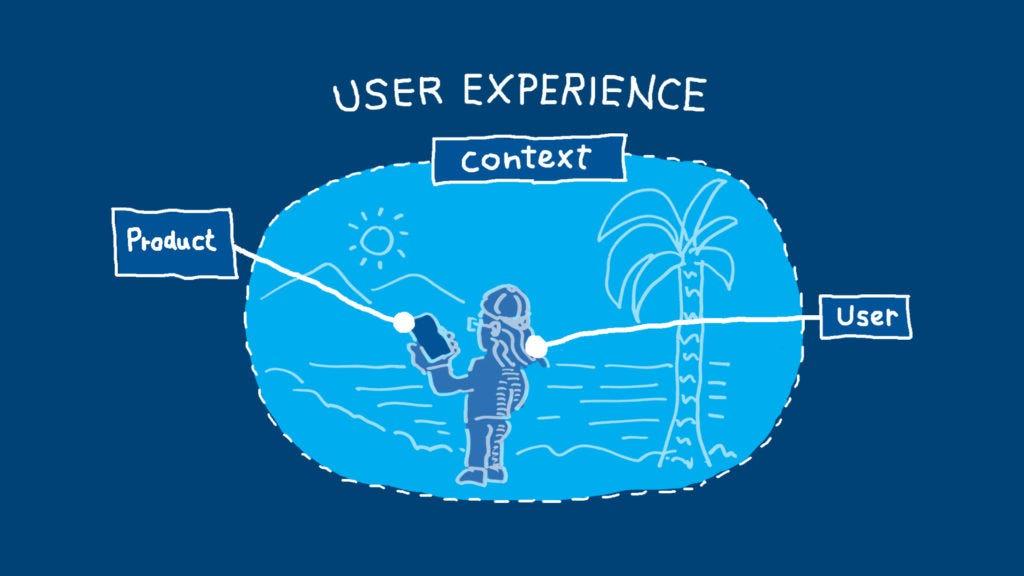 User experience = Product + User + Context — always evaluate from within, not from a distance
A user experience happens when there are:
- Product
- User
- Context
This means it’s important to always see things in context — to put yourself in the user’s shoes and focus on user experience from the user’s perspective, not from a UX expert’s point of view from a distance.
Because we as UX designers are UX experts, we tend to slip into an expert’s point of view almost instantly, by default, without realizing it — unless we actively pay attention not to do so.
3. Define a focus area, then experience products as a user
It’s usually better to define a focus area you want to compare across competitors, depending on the scope and focus of your project.
If you don’t have a particular focus area, it’s generally best to look at the primary task a product offers — what the product is fundamentally meant to do.
For example, if I’m creating a user experience for a new travel booking service, I’d want to do a competitive analysis on competitors’ travel booking sites. The primary goal for users of those sites is to book flights, hotels, and cars at the best deal possible.
Logically, I would use all the competitor sites — Expedia, Hotwire, Kayak, and so on — to actually complete a booking as a real user, documenting every step of my experience with screenshots, notes, and screen recordings.
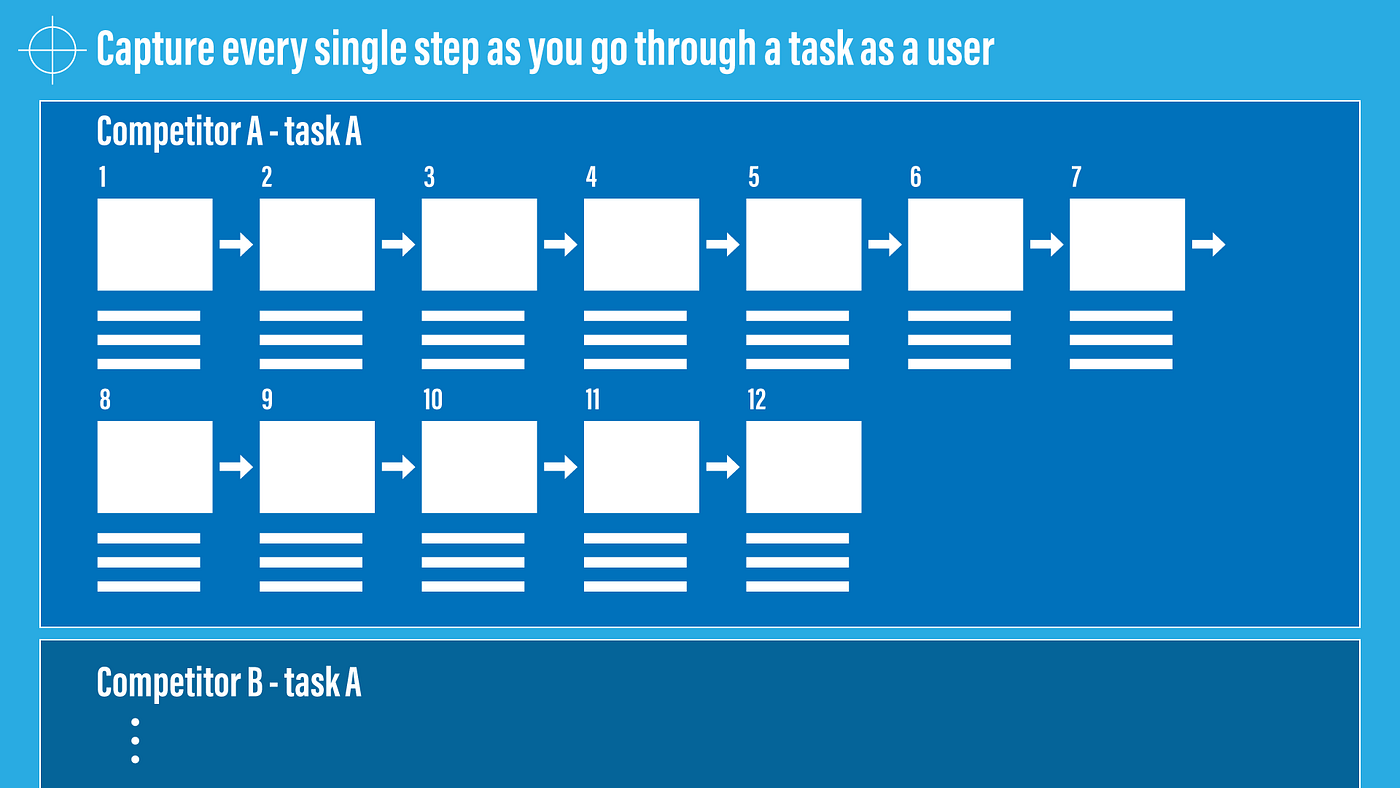 Capture every single step of your experience as a user — screenshots, notes, screen recordings
I may want to do this on both desktop web and mobile (iOS and Android).
4. Create a customer journey map
The experience documented in step 3 naturally results in a customer journey map of the primary task flow across all competitors.
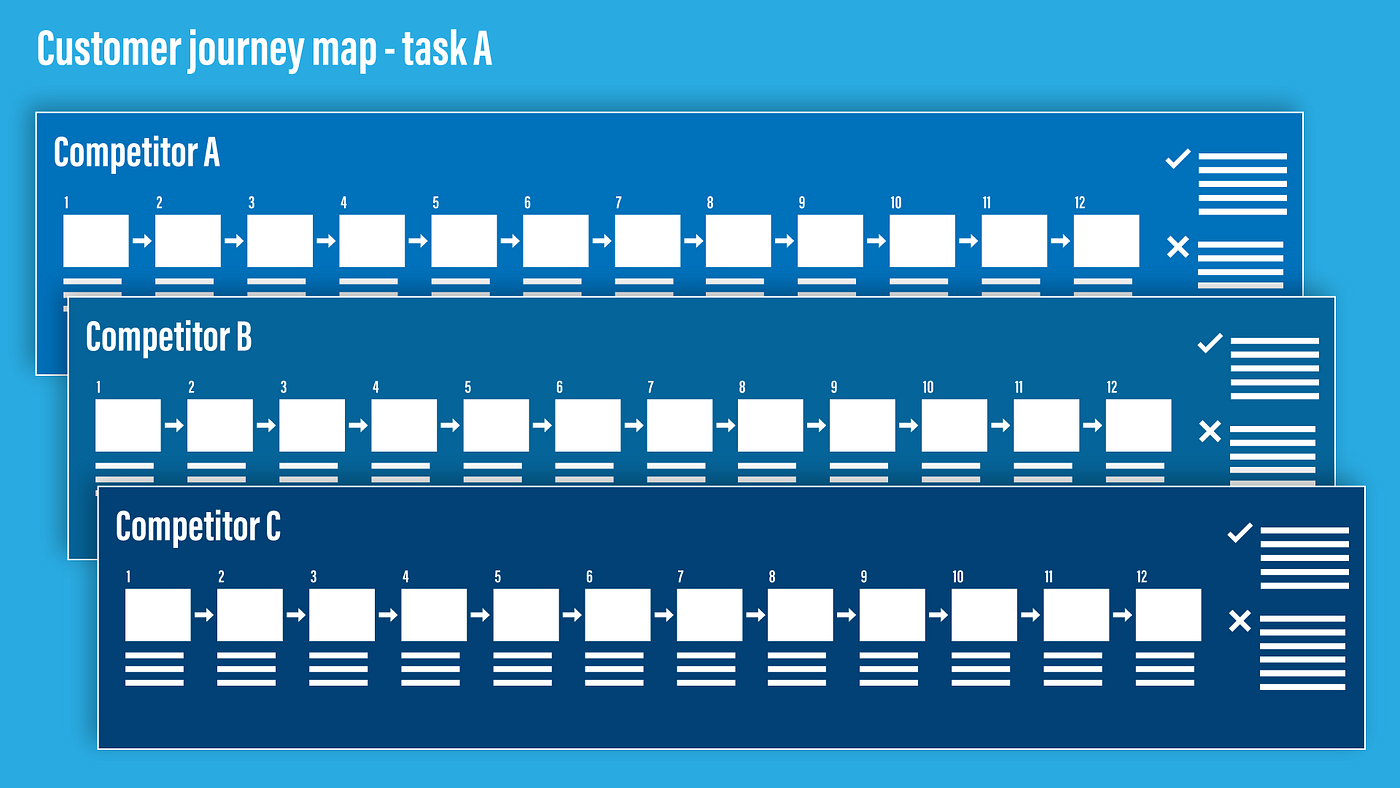 Customer journey maps emerge naturally from experiencing each competitor as a user
At this point, you’ll typically have accumulated a large collection of findings and insights — strengths, weaknesses, and unique qualities of each competitor — documented along the way.
5. Expand to surrounding areas if needed
Going through primary tasks across multiple competitors will open up surrounding, relevant questions.
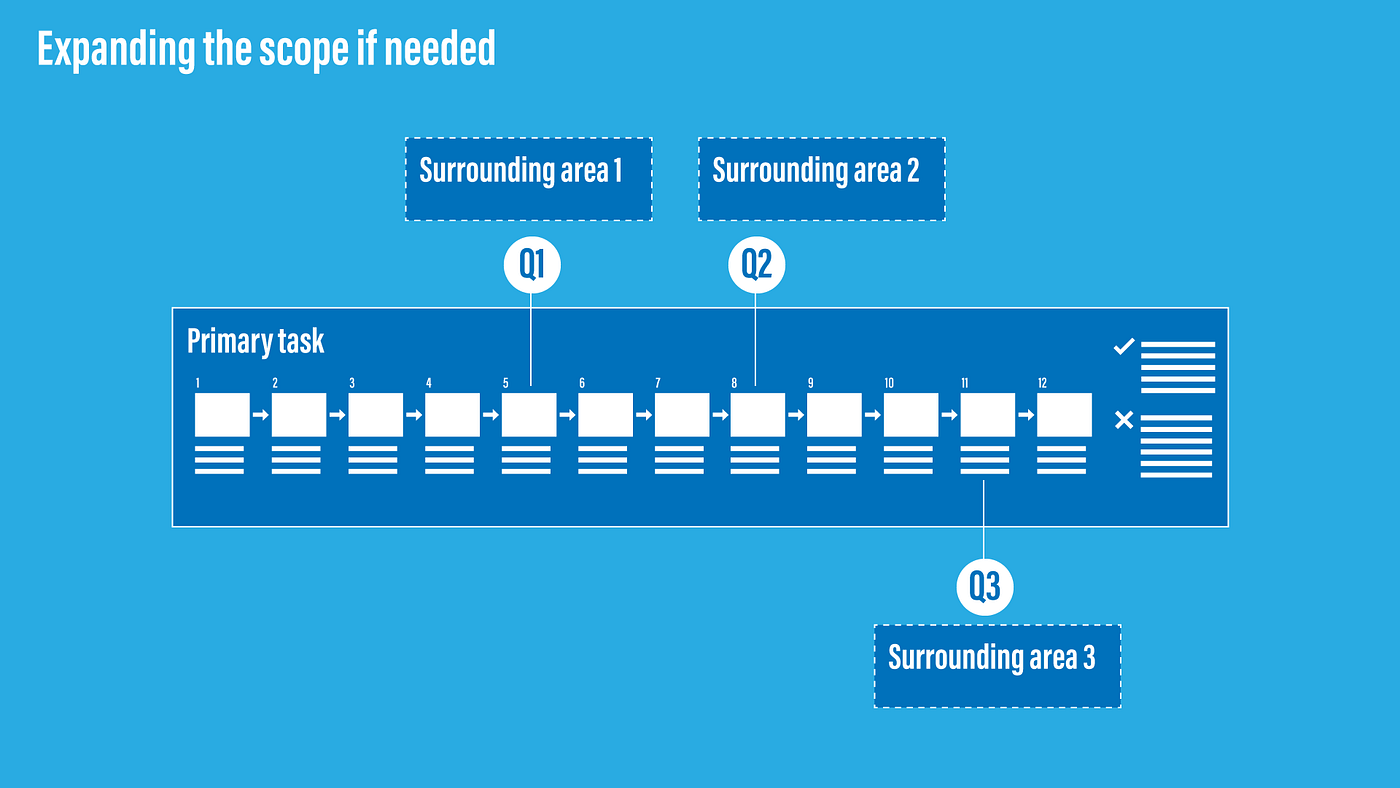 New questions naturally emerge around the primary task — decide which to pursue based on project goals
For example, I might want to find out how users discover these travel booking services in the first place — via Facebook ads, Google ads, direct email, or simply a search. This opens up further questions:
- How do competitors appear in search results?
- How do competitors handle SEO?
- What follow-up do competitors do once a booking is completed?
- What do their confirmation emails look like?
Among these, I can decide which area to investigate further based on my project goals and resource constraints.
Competitive analysis is a powerful tool
Competitive analysis might sound tedious or overwhelming — but it’s not.
As long as you understand the core principles and set a clear focus and goals, it becomes a powerful and valuable tool to strengthen your design output.
It’s also not something rigid with one prescribed approach. You should feel free to adapt it to your own needs. If you’re working on a specific new feature for an existing product, for instance, you can focus just on that feature across competitors.
Look beyond direct competitors
You don’t need to limit yourself to only looking at direct competitors.
This is not competitive market analysis — the focus is user experience. That means you can draw from anywhere.
If I’m working on a travel booking product and looking for a reference for a multi-step wizard, I might look at healthcare or financial products. If I need an efficient approach to an advanced filter, I might look at online retail stores.
Often, I find better examples of what I’m looking for from a completely different, unexpected industry or field.
Of course, every product has its own specific context. When you take a reference from a different field, you need to understand the context in which it was designed — because that context may be quite different from your product’s.
The reason for doing competitive analysis is not to copy, but to gain insights through learning from others — to shed new light on your project from a different perspective, and use that to improve your design.
As long as you do it with that intent, your competitive analysis will be genuinely beneficial.
In this world, so many people have tried so many things already. It’s literally impossible to learn everything relevant that has ever been created. And that cool new interaction concept you just came up with might be something a dozen other people already tried a few years ago.
But spending even a modest amount of time researching competitor products and relevant interactions will give you learning opportunities and insights you may never have thought of on your own.
I always get a huge benefit from doing competitive analysis whenever I work on a UX project.
You’ll be surprised how much you can learn — and how much it inspires you.