UX/PM/Engineer Collaboration — A Critical Factor for a Product's Success
 Ryutaro Sakai 10 min read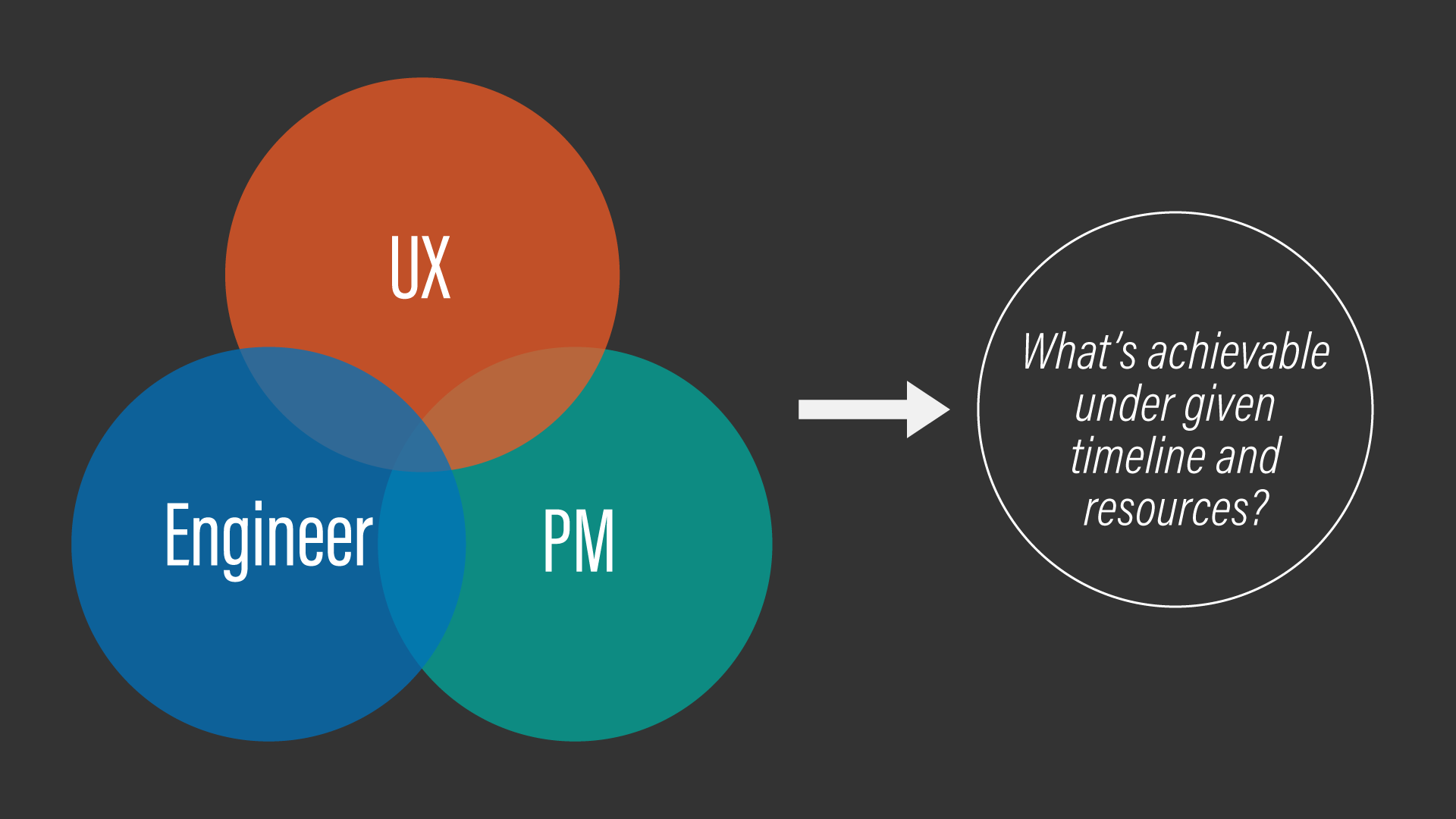
Many UX educations put UX in isolation and disregard the importance of UX/PM/engineer collaboration. But in reality, the success of a project from a UX perspective is more affected by how well collaboration among these three disciplines is executed, rather than what a UX team or UX designer can achieve alone.
When I was younger, I used to think that a UX designer has tremendous power and influence over a product’s user experience, and that the quality of the designer’s output is what ultimately impacts the final product most.
This still holds true — but only if one other critical condition is met.
And that critical condition is UX/PM/engineer collaboration.
I learned this the hard way through various failures, which I’d like to share with you.
Collaboration with PM (product manager)
UX is not the only product value
A product’s value consists of outcome and experience. Outcome is the functional aspect — what a product does. Experience is the emotional quality — how you feel when using it. UX covers the experience part in full, and also covers a significant portion of the outcome. Altogether, UX plays a major role in product value.
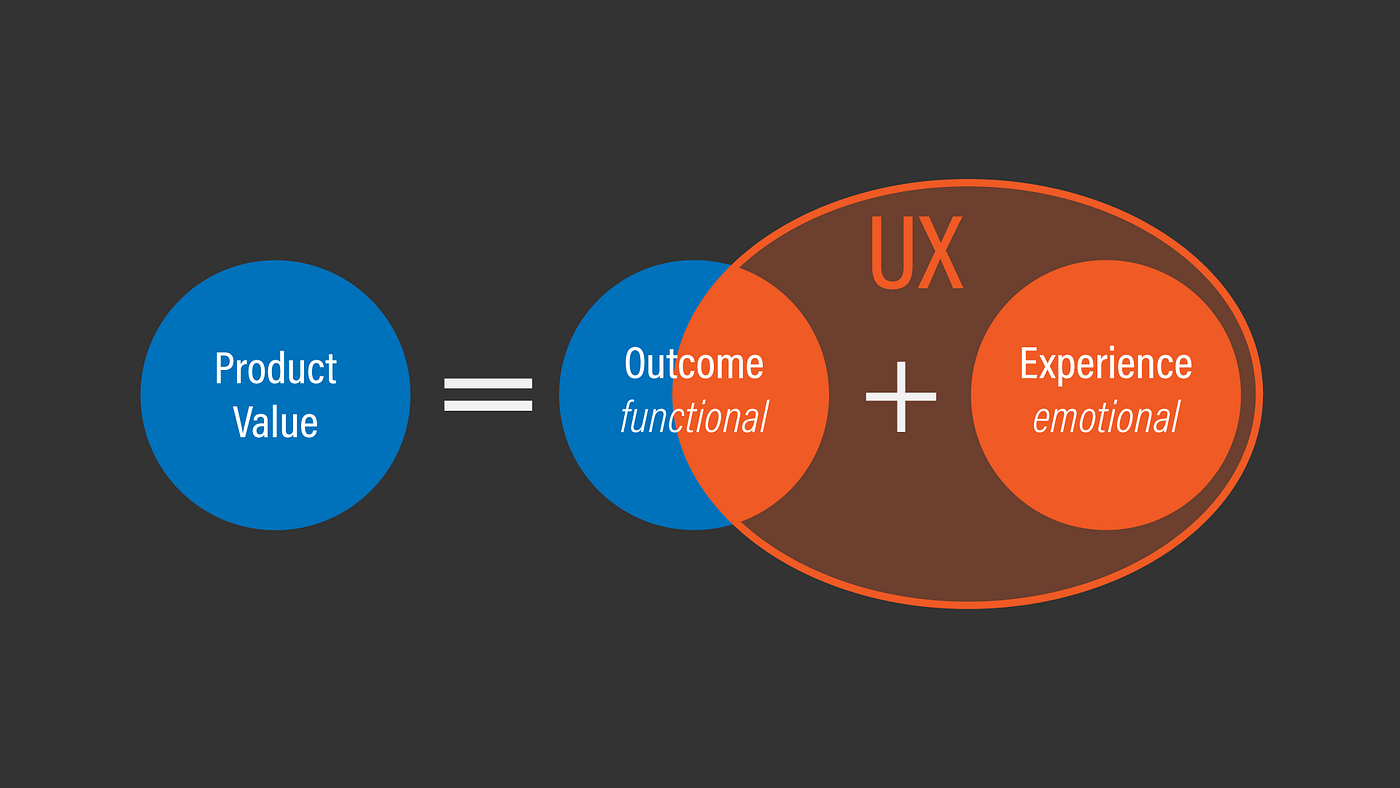 Product value consists of outcome and experience — UX covers both
PM owns a product
While UX plays a critical role, a UX designer never owns a product. PM owns the product definition, requirements, and roadmap. Naturally, MVP (Minimum Viable Product) is typically defined by PM — the bare minimum set of requirements needed to launch and still provide value to a customer.
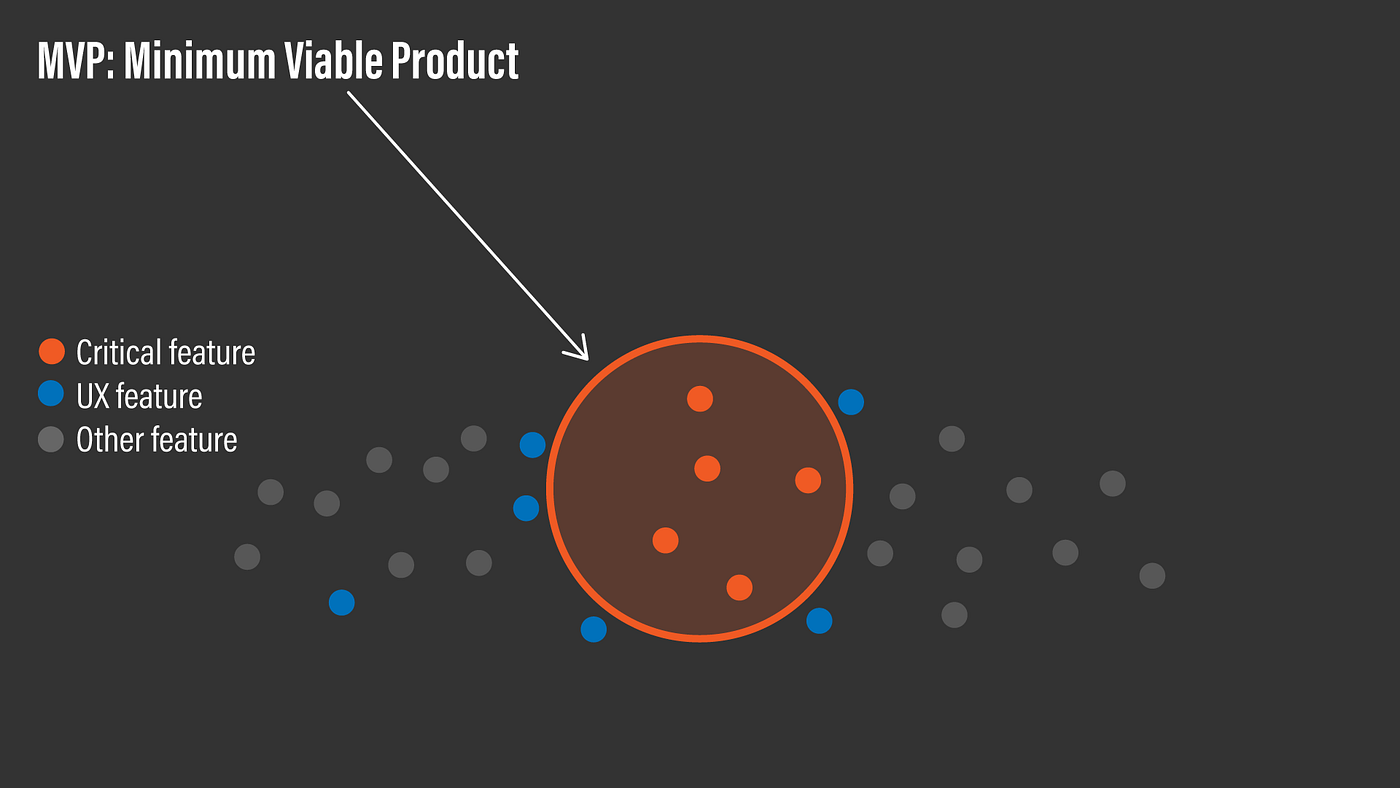 MVP is the bare minimum to launch — it typically focuses on functional outcome
Because it’s minimum, MVP typically doesn’t take the experience part of product value much into consideration. It primarily focuses on achieving functional outcome.
There’s a related concept called MLP (Minimum Lovable Product) — the minimum set of requirements to make a product not only functional but something a customer would love. This “love” addresses experience — the emotional aspect that goes beyond pure function.
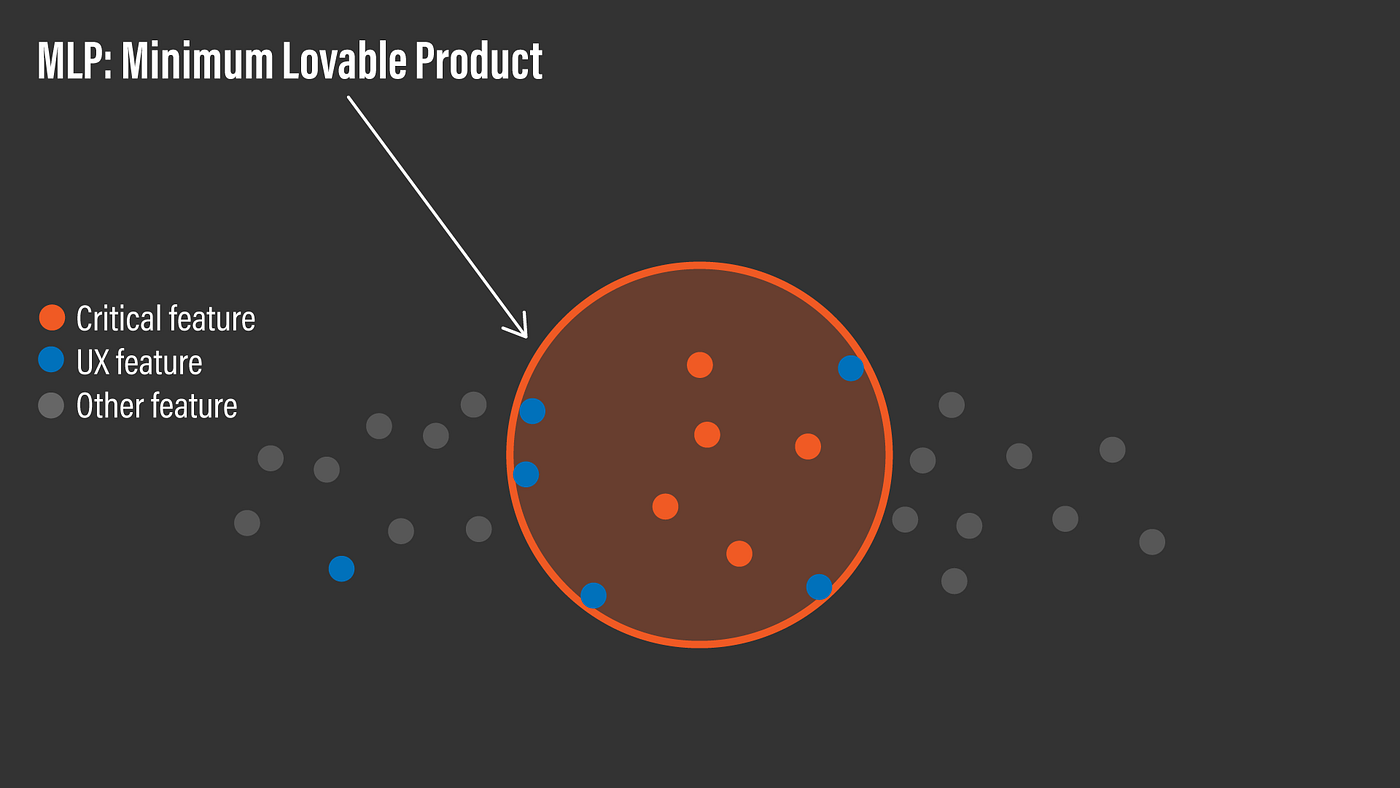 MLP goes beyond MVP to address the emotional experience of a product
From a pure UX perspective, you want to make both outcome and experience as good as possible. Unfortunately, in many cases the experience part is considered outside of MVP by PM.
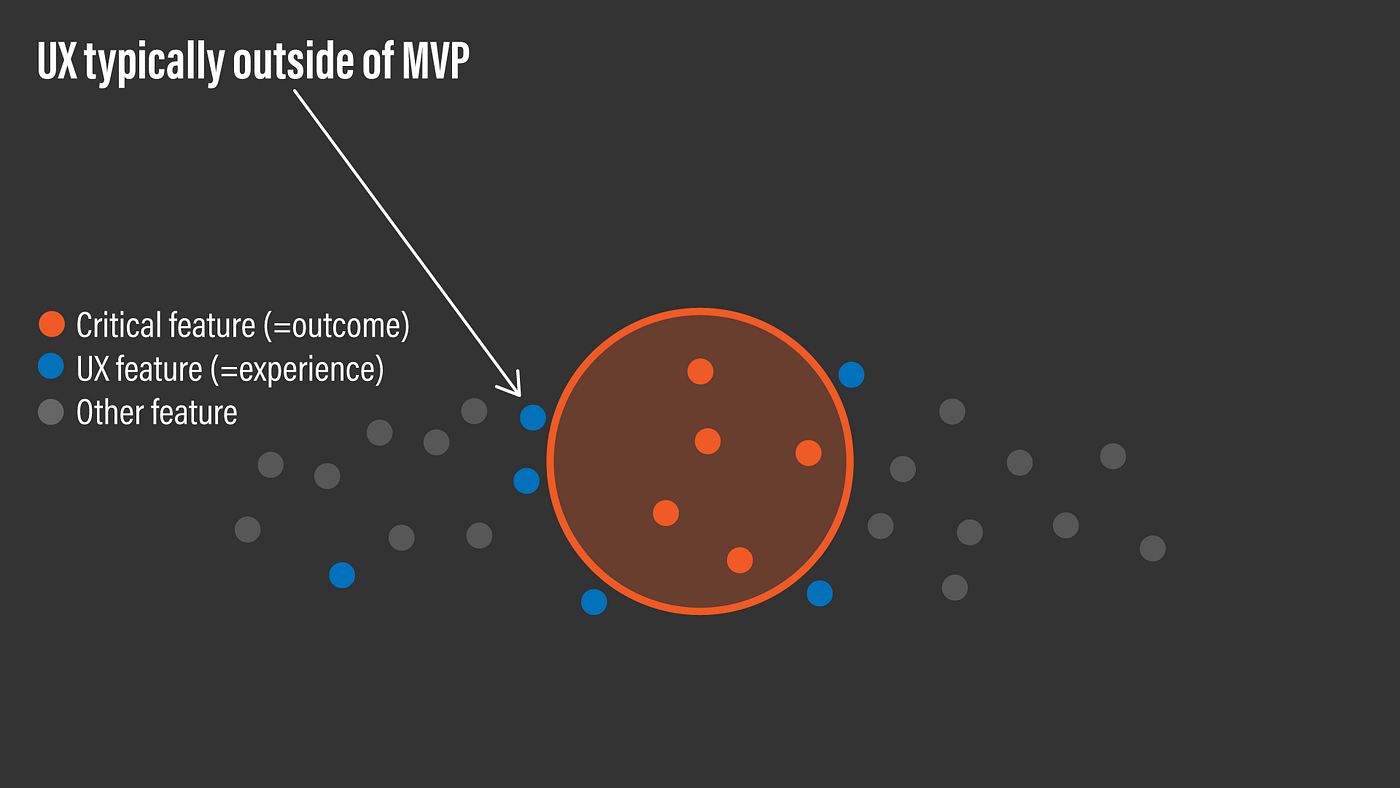 UX enhancements are often labeled lower priority and pushed outside MVP
Outcome is always part of MVP — without function, a product is useless. But user experience enhancements tend to be labeled lower priority. When PM is confronted with limited resources and needs to ship critical features on time, UX enhancements are typically among the first to be cut.
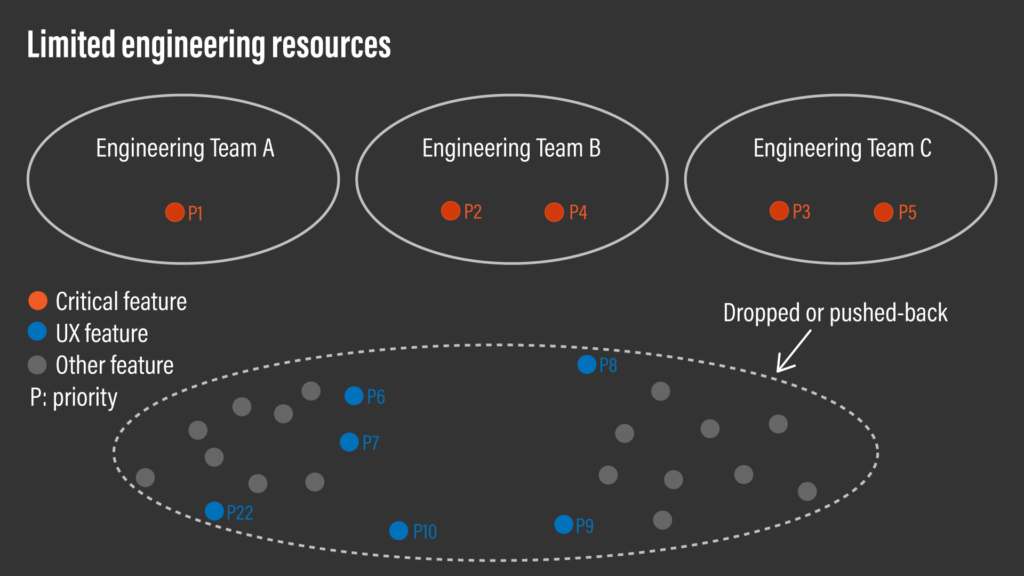 Available resources — especially engineering — are always constrained
PM owns feature prioritization
Feature prioritization is one of PM’s most important tasks. What typically happens is that the first version of a product launches with MVP, and then subsequent versions start addressing MLP and beyond.
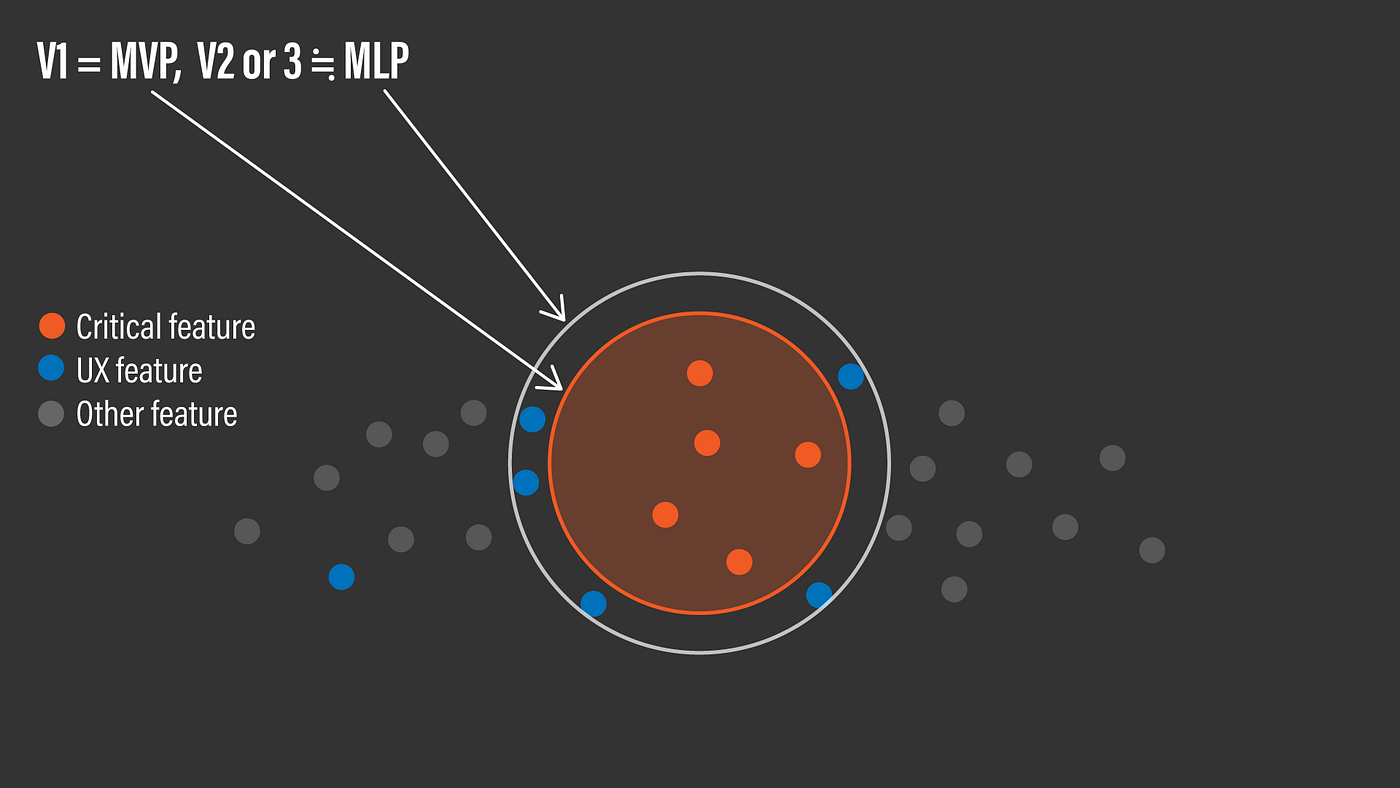 Products typically ship MVP first, with experience improvements in later versions
There’s a well-known theory called the Kano Model for product development and customer satisfaction, developed in the 1980s by Japanese professor Noriaki Kano. It classifies customer preferences into five categories:
- Must-be quality
- One-dimensional quality
- Attractive quality
- Indifferent quality
- Reverse quality
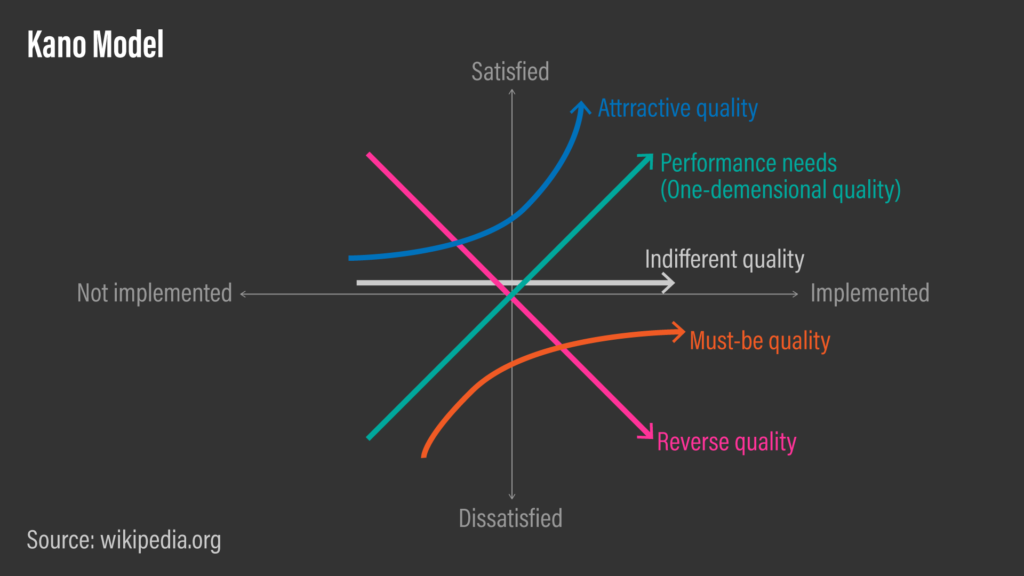 Kano Model — understanding how features are positioned from a customer’s perspective
Understanding how each feature maps to the Kano Model is important when prioritizing for a product. A UX designer should work together with PM to help prioritize features so that the experience part is not ignored — even if this isn’t typically considered part of a UX designer’s job. Feature prioritization hugely impacts user experience, and PM may not realize all the UX implications of their decisions.
Understanding the larger business context
A UX designer needs to understand the larger business context in order to function effectively as part of a product team.
I experienced many situations where a disconnection between a UX team and PM resulted in the UX team working hard on features that were never implemented in the real product.
Even with close collaboration, priorities can shift due to competitive landscape changes, resource fluctuations, and more. Whenever that happens, PM adjusts the plan — which may mean pushing features out of scope.
Instead of waiting for PM to inform you, a UX designer should proactively engage with PM on a regular basis. PM is always busy with many things to worry about, and updating a UX designer can easily fall off their list. This is why a strong partnership with PM — not just collaboration, but genuine partnership — becomes so important.
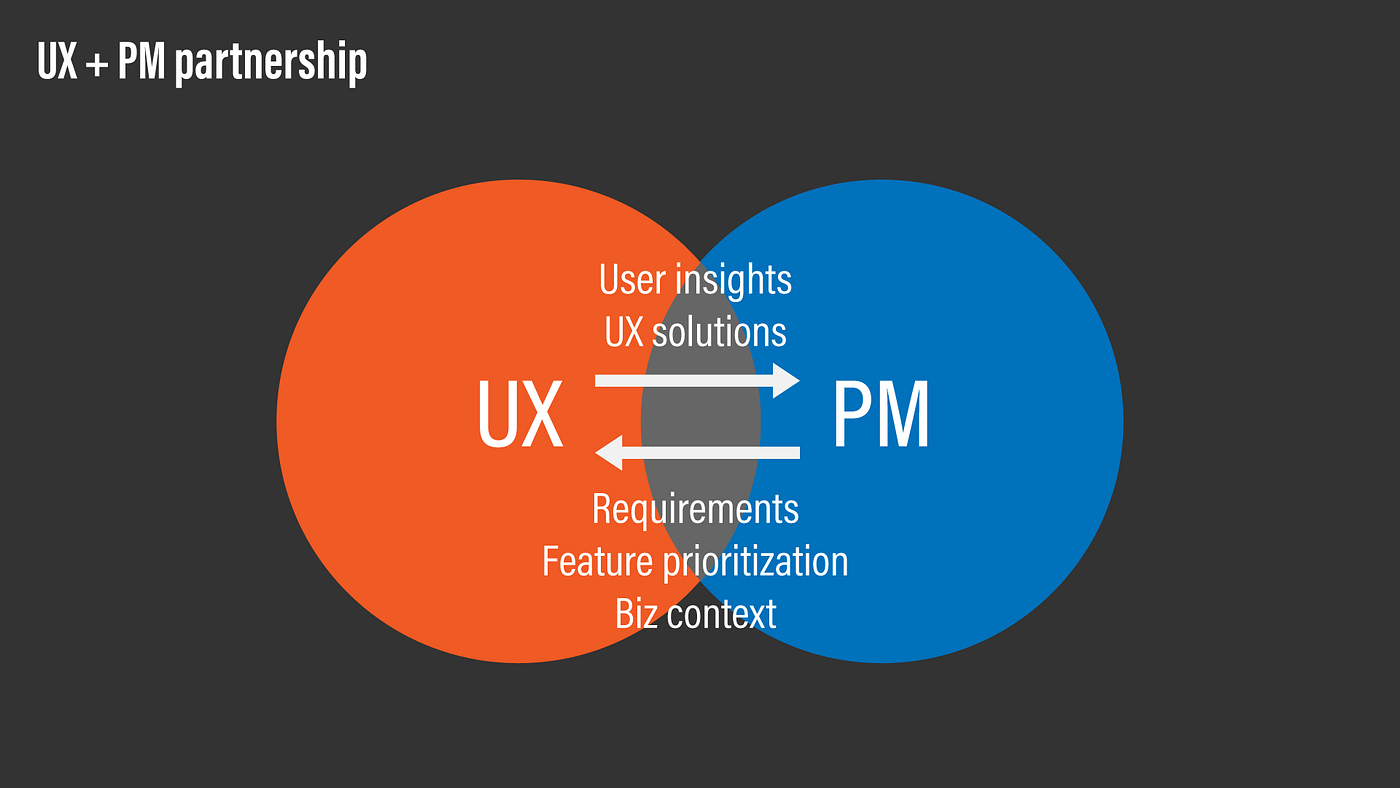 A strong UX/PM partnership keeps UX in the loop of the larger product context
Collaboration with engineers
A product needs to be built by engineers to launch to the world. An ideal UX that can’t be built is meaningless. An ideal UX that costs too much to build is impractical.
Even if your design provides a better experience than the current version, it doesn’t make sense for engineers to move forward if it’s too expensive to build, or if the assigned team doesn’t have the skillset to implement it correctly.
At the end of the day, wireframes and prototypes cannot launch a product. Engineers build it. Full stop.
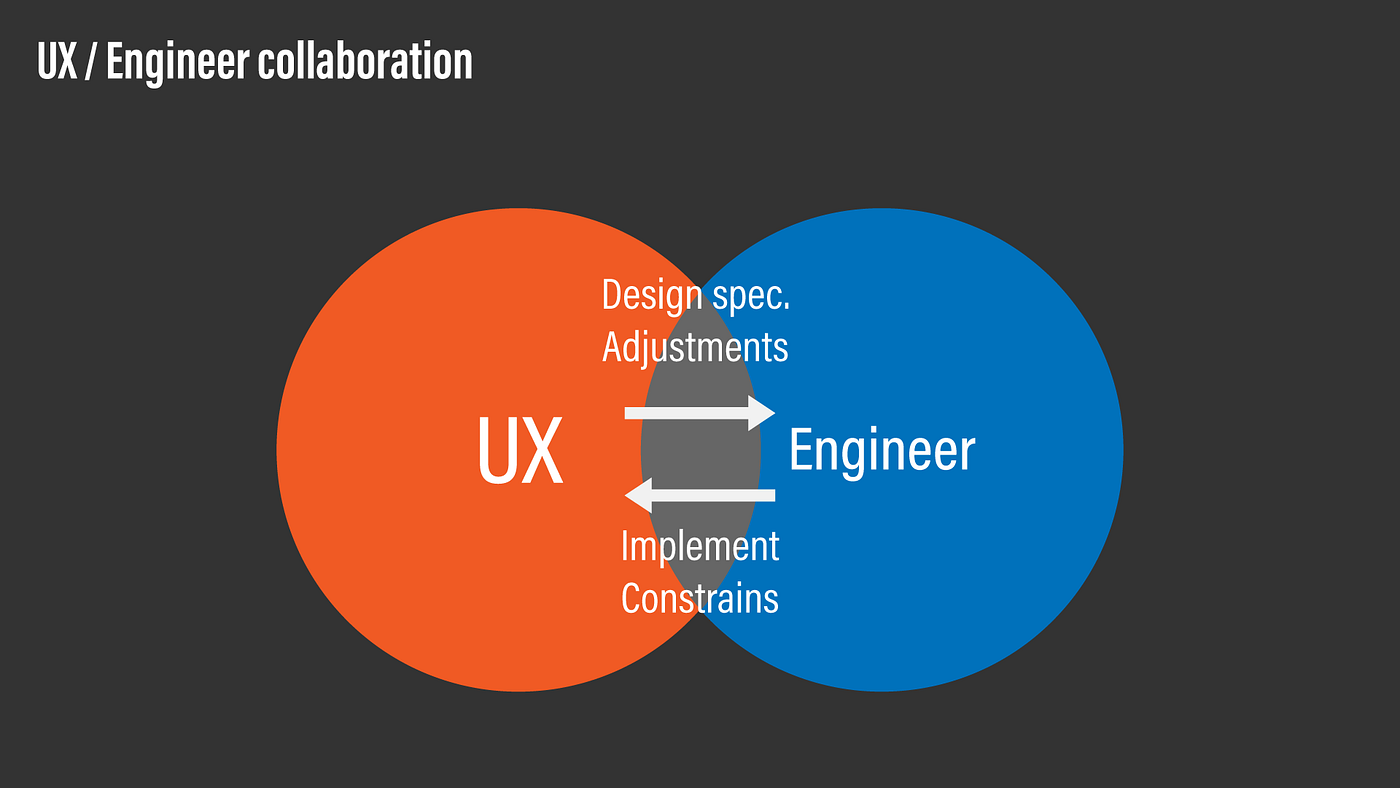 Without engineer collaboration, even great UX design cannot reach users
Design handoff is not the end
A UX designer’s core output is a detailed specification of how a product experience should be — prototypes, design specs, wireframes, guidelines — delivered to engineers in what’s commonly called a handoff.
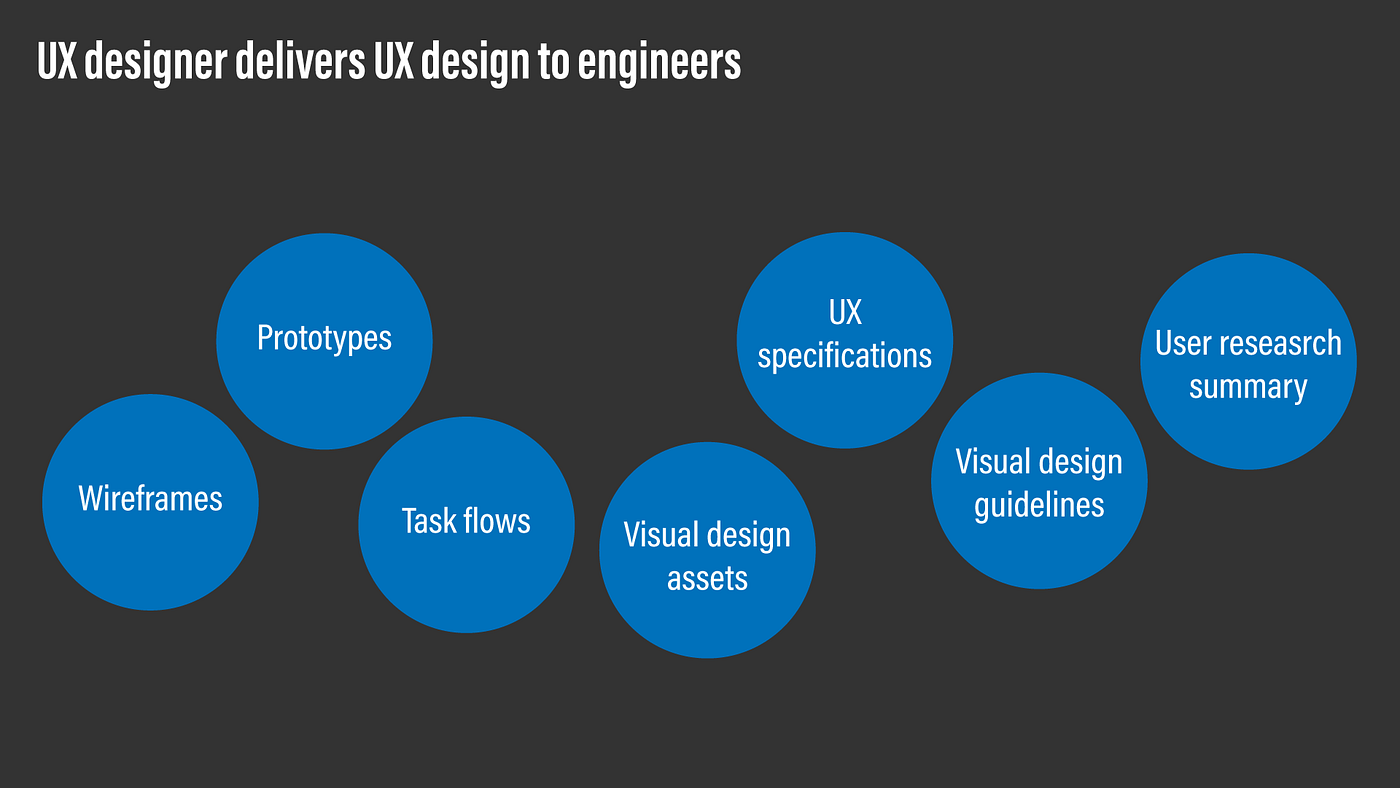 Design deliverables: prototypes, specs, wireframes, and guidelines
Many people think that once deliverables are shared with engineers, the UX designer’s job is done. In reality, that is not true at all. Another phase starts from here — one where collaboration with engineers becomes the central part of the work.
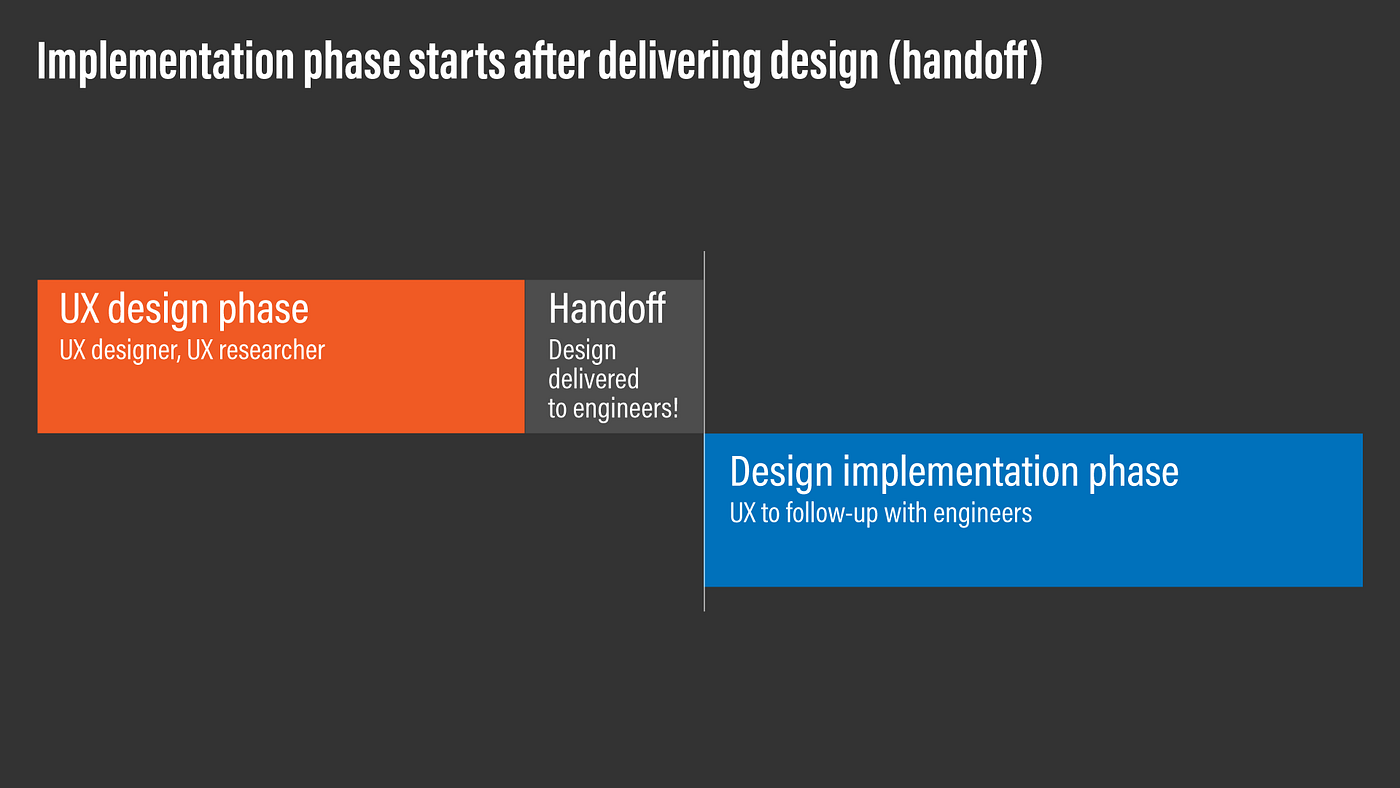 Handoff marks the beginning of the implementation phase, not the end of UX involvement
Even when engineers have been included throughout the UX process — through requirement gathering, journey mapping, concept development, user research, and design iteration — they won’t be able to identify all implementation challenges in advance. When UX work is happening, engineers are typically busy with other things.
Engineers are always under tight deadlines. Their top priority is making things function stably and fixing critical bugs. User experience naturally falls lower on their list and gets addressed last. I’ve experienced many times the disappointment of delivering handoffs on time only to find out a month later that engineers hadn’t reviewed them yet.
And when they finally do start implementing, that’s when they come back saying “you can’t do this because the platform doesn’t support it” or “this data isn’t available because we don’t have an API for it.”
If a UX designer doesn’t follow through with engineers after handoff, the final product may look nothing like the original design — and all that hard work is wasted.
Good, experienced UX designers know this. They spend significant time working with engineers post-handoff to ensure correct implementation and make adjustments where needed.
What matters at the end is how the actual final product experience turns out — ideally as close as possible to the original design that was tested with users. A beautiful prototype provides no value to customers if it isn’t implemented as intended.
Design handoff is not the end. It’s the beginning of the implementation phase — which directly impacts the quality of the final product more than the design phase itself does.
UX/PM/engineer collaboration
When engineers find implementation issues or PM needs to reshuffle priorities, a UX designer needs deeper discussion with both to determine what’s achievable under the given timeline and resources. Based on that, design or schedule may need to be revised.
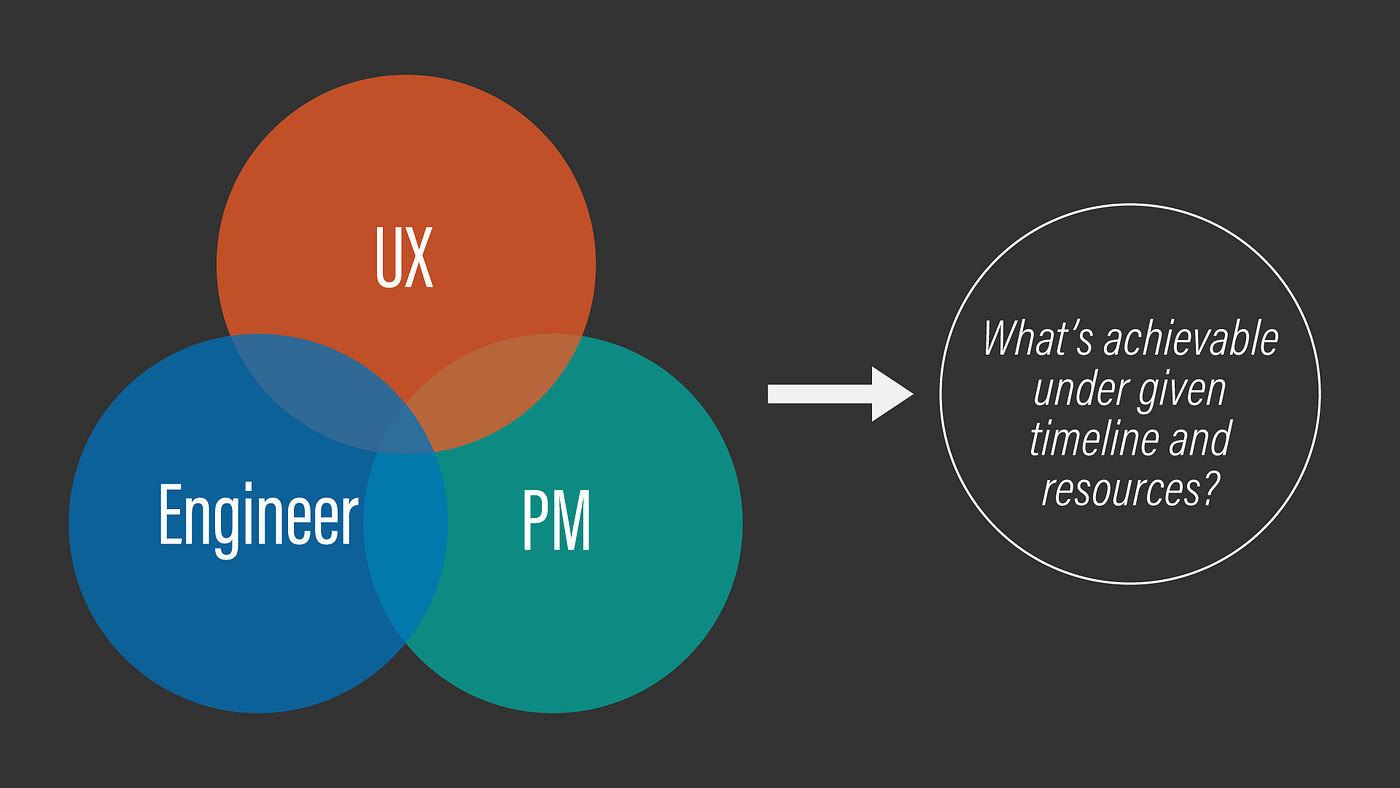 Three-way collaboration determines what’s achievable under real constraints
At the end of the day, PM makes the call — PM owns the product roadmap. The questions that need to be assessed together include:
- If you don’t change the design, how much more resources are needed to ship on time?
- If resources can’t be added, how much delay results?
- If you delay, what is the business impact? Is it worth it?
- Is keeping the original design critical to the product’s value proposition?
- If you change the design to accommodate engineering constraints, can you still ship on time?
- If you change the design, how much does it impact the user experience? Is it a show-stopper, or acceptable?
- Is a two-step approach possible — launch with the modified design and improve it later?
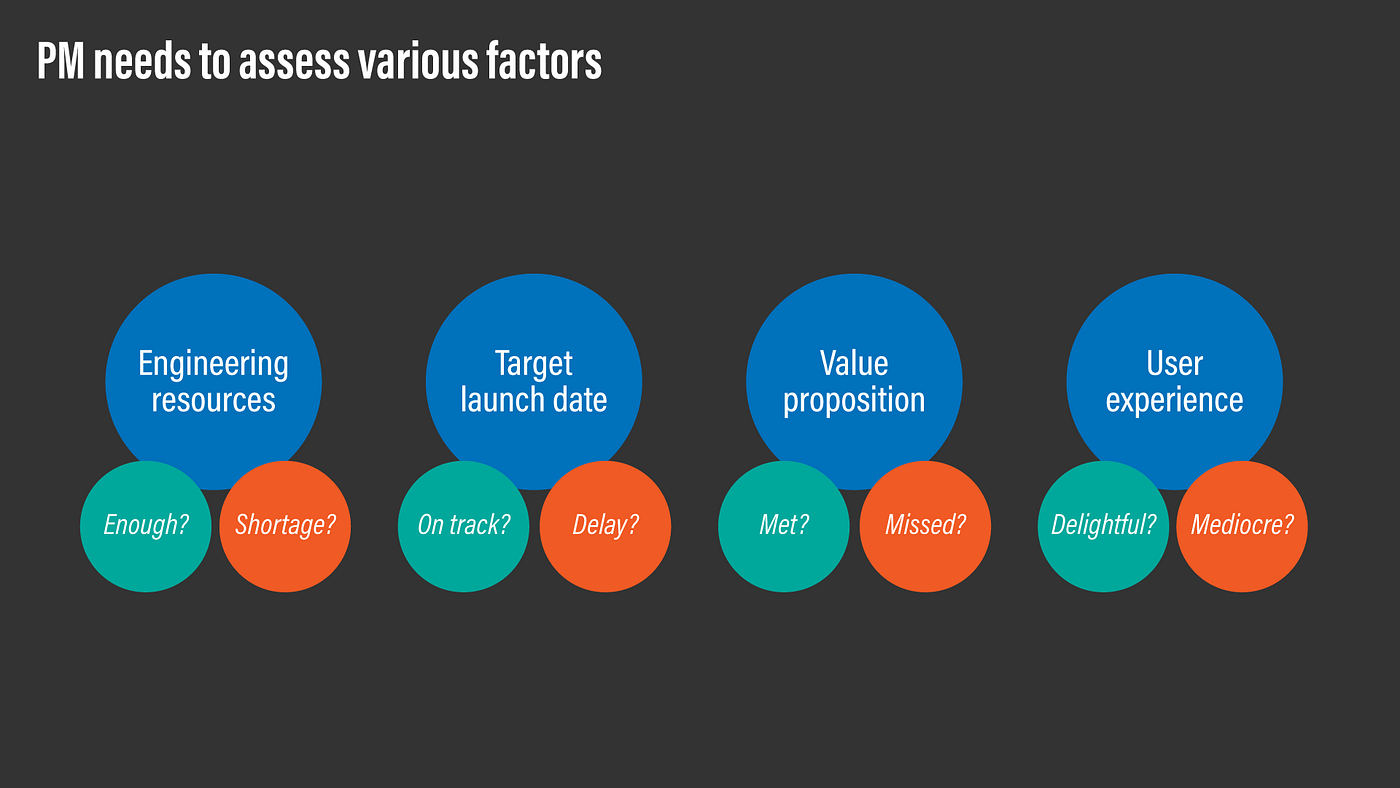 PM assesses all factors with inputs from UX and engineering to make the final call
In product development, change is constant.
A UX designer should advocate for users as much as possible — but for that to matter, a product needs to exist and launch in the first place. A UX designer is responsible for helping PM and engineers make that happen. UX is part of business after all.
As a UX designer, I learned that you need to be nimble and flexible — ready to quickly adjust designs when needed, and connected enough to hear about higher-level changes early so you can respond without wasting time.
Therefore, it is critical for a UX designer to maintain a strong partnership with PM throughout the product development process, and to work closely with engineers before and after handoff — in order to actually realize the design in the final product.
Now that I look back, there are many products and projects where I wish I had understood all of this earlier.
Still, it was an invaluable lesson to realize that UX cannot exist on its own. UX is part of a larger product team, part of a business. UX designers rely on PM and engineers to bring their design to life. UX needs PM and engineers to make that happen.